1. Concept
Managed Wound-Response & Resin Compartmentalization
- Purpose: To control how a tree responds to injury or biotic stress so that resin forms in predictable locations and quantities.
- Goal: Maximize resin quality and yield while keeping the tree healthy.
- Mechanism: Combines controlled wounding with localized induction of defense responses.
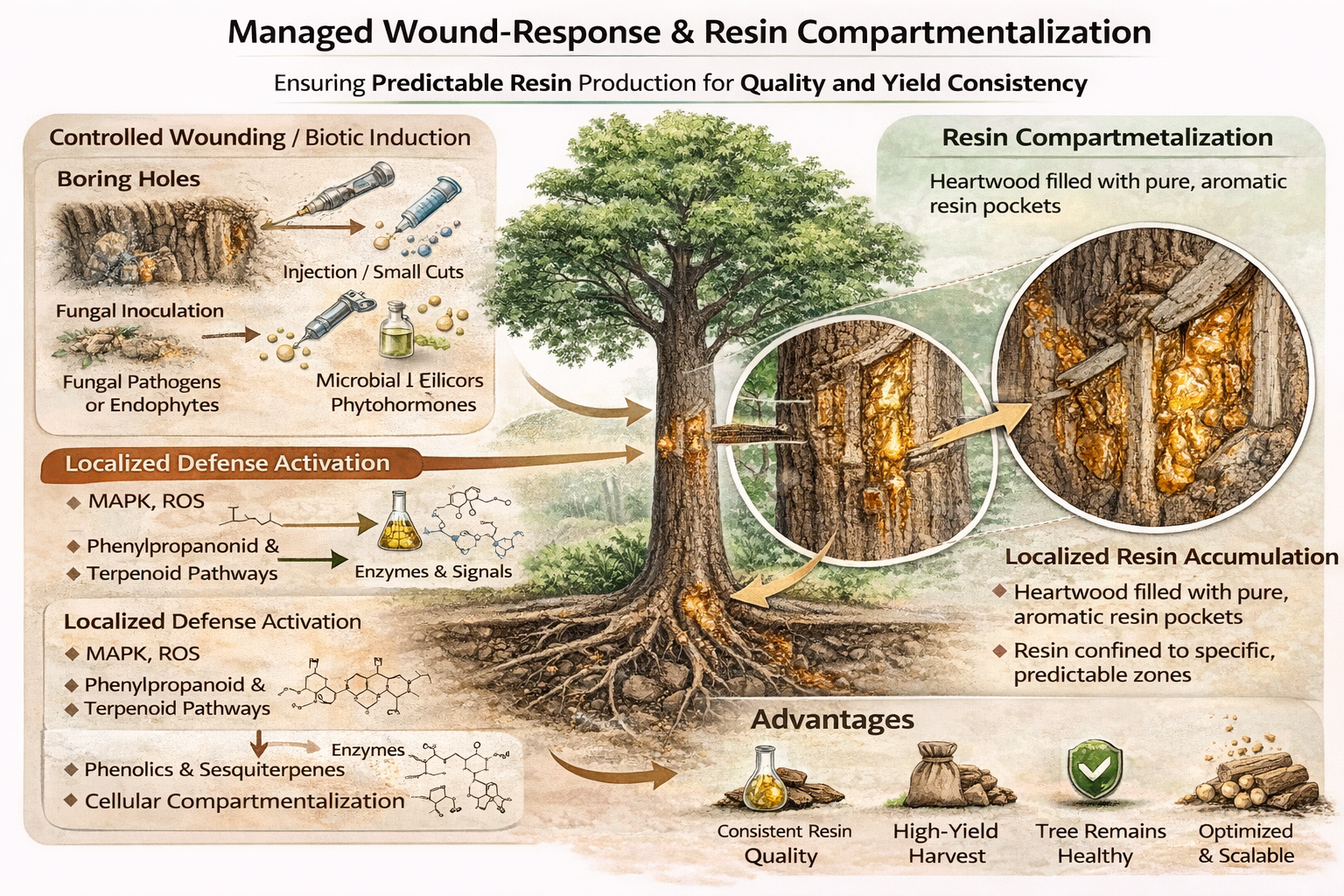
2. Mechanism
- Controlled Wounding / Induction
- Physical or chemical treatments create targeted micro-injuries.
- These act as signals for the tree to produce resin.
- Can be combined with biotic stress induction (fungal inoculation, microbial elicitors, phytohormones).
- Resin Compartmentalization
- The tree isolates resin in specific zones (heartwood, xylem channels, cavities).
- Compartmentalization prevents spread of pathogens and limits tissue damage.
- Ensures resin density and composition remain consistent across trees and treatments.
- Cellular & Molecular Response
- Activation of phenylpropanoid and terpenoid pathways in localized tissues.
- Defense compounds and resin precursors accumulate in specialized resin ducts or pockets.
- Tree maintains overall health while producing high-value resin.
3. Advantages
| Feature | Managed Response | Natural Wounding |
|---|---|---|
| Resin Distribution | Predictable, uniform | Random, variable |
| Resin Quality | Consistent chemical profile | Variable |
| Tree Health | Maintained | Often compromised |
| Yield | Optimized | Uncertain |
4. Applications
- Agarwood cultivation: Produces high-grade agarwood resin for perfumery.
- Aromatic oils production: Ensures consistent sesquiterpene and essential oil profiles.
- Research: Study of tree defense compartmentalization and stress physiology.