1. Definitions
Endophytic fungi
- Live inside plant tissues (leaves, stems, roots) without causing disease.
- Can provide benefits like growth promotion, stress tolerance, or disease resistance.
- Examples: Fusarium oxysporum (non-pathogenic strains), Trichoderma spp., Penicillium spp.
Rhizospheric fungi
- Colonize the rhizosphere, the soil region immediately surrounding plant roots.
- Affect plant growth via nutrient cycling, disease suppression, or signaling.
- Examples: mycorrhizal fungi (Glomus spp.), Trichoderma, Aspergillus species.
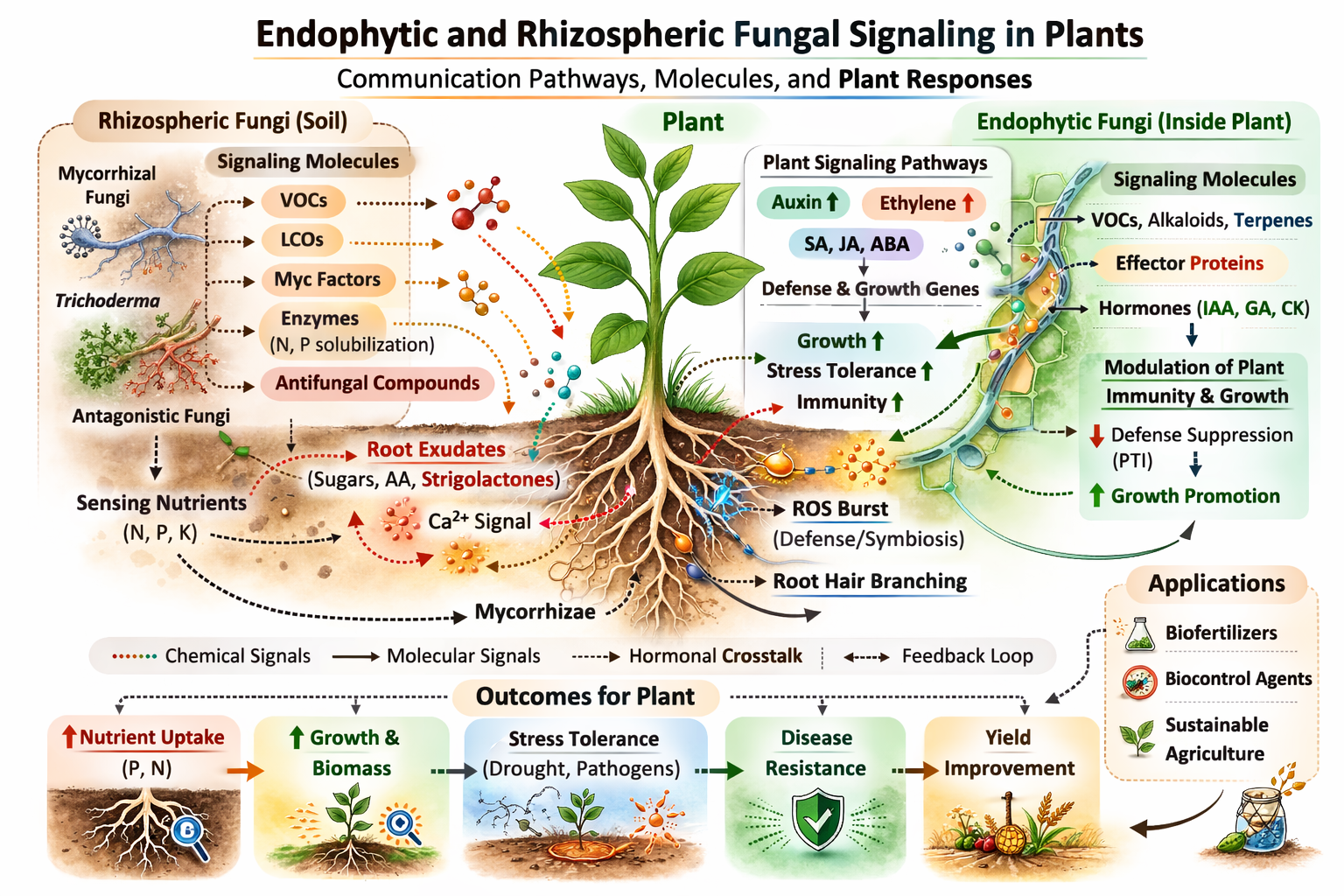
2. Types of Fungal Signaling
Fungi communicate with plants, other microbes, and the environment using chemical, physical, and molecular signals.
A. Endophytic fungal signaling
- Volatile Organic Compounds (VOCs): Small molecules that can trigger plant defenses or growth hormones (e.g., auxin, ethylene).
- Secondary metabolites: Alkaloids, terpenes, and phenolics can protect plants or modulate immune responses.
- Effector proteins: Secreted proteins can alter plant signaling pathways, often to suppress plant defenses temporarily for mutualistic colonization.
- Hormone modulation: Some endophytes produce or influence IAA (indole-3-acetic acid), gibberellins, and cytokinins.
Example: Fusarium solani endophytes can produce VOCs that increase plant root biomass and stress tolerance.
B. Rhizospheric fungal signaling
- Mycorrhizal signals:
- Strigolactones from plants stimulate arbuscular mycorrhizal fungi hyphal growth.
- Fungi produce Myc factors, which activate plant root gene expression for symbiosis.
- Quorum sensing: Fungi release molecules to coordinate growth or antagonism in response to population density.
- Antagonistic signals: Rhizospheric fungi can inhibit pathogens via antifungal metabolites (e.g., Trichodermaproducing gliotoxin).
- Nutrient signaling: Fungi sense nutrient availability (N, P, K) and release enzymes or transporters to mobilize nutrients to the plant.
Example: Mycorrhizal fungi release lipochitooligosaccharides (LCOs) that trigger plant calcium signaling, leading to root hair branching and symbiotic structures.
3. Cross-talk Between Endophytic and Rhizospheric Fungi
- Endophytes can originate from rhizosphere fungi that colonize roots.
- Signaling molecules like VOCs or soluble metabolites may travel from the rhizosphere into the plant.
- Both fungi types can modulate plant immune responses, sometimes synergistically:
- Example: Rhizospheric Trichoderma primes plant immunity, and endophytes enhance stress tolerance.
4. Signaling Pathways Involved
- MAPK (Mitogen-Activated Protein Kinases): Triggered by fungal effectors and metabolites.
- Hormonal pathways: Auxin, ethylene, salicylic acid (SA), jasmonic acid (JA), abscisic acid (ABA).
- Calcium signaling: Rapid plant root response to fungal LCOs or VOCs.
- Reactive Oxygen Species (ROS): Localized ROS bursts mediate plant defense or symbiotic accommodation.
5. Applications
- Agriculture: Biofertilizers or biostimulants using endophytic and rhizospheric fungi to improve crop yield.
- Biocontrol: Suppression of soil-borne pathogens through fungal signaling molecules.
- Biotechnology: Endophyte-derived secondary metabolites for pharmaceuticals or plant stress resilience.