1. Concept
Controlled Biotic Stress Induction
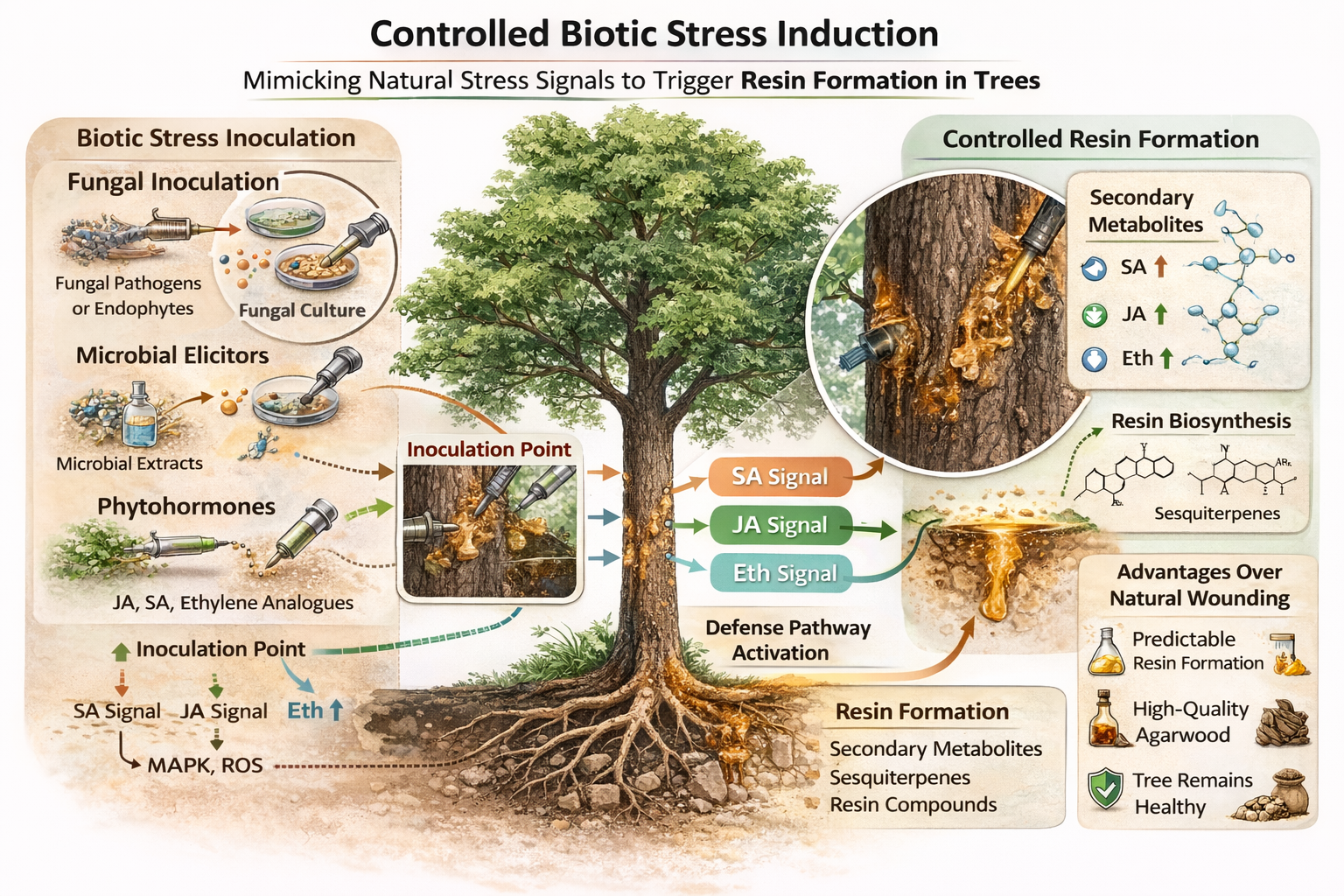
- Purpose: To mimic natural stress signals that would normally trigger resin (oleoresin) formation in trees.
- Goal: Induce high-quality resin production without harming overall tree health or survival.
- Natural trigger: In the wild, resin forms in response to injuries, pathogen attack, or insect infestation.
- Controlled version: Artificially introduces signals in a measured, safe way.
2. Mechanism
- Biotic stress signals can include:
- Fungal inoculation (e.g., Fusarium oxysporum, other endophytic or pathogenic fungi).
- Microbial elicitors (compounds released by microbes that trigger plant defense).
- Phytohormone treatments (JA, SA, or ethylene analogs) that mimic stress signaling pathways.
- Tree response:
- Activation of defense pathways: Salicylic acid (SA), jasmonic acid (JA), ethylene signaling.
- Production of secondary metabolites, especially resin compounds like sesquiterpenes.
- Localized resin accumulation around the inoculation site, without systemic tissue damage.
3. Advantages Over Natural Wounding
| Feature | Natural Stress | Controlled Biotic Stress |
|---|---|---|
| Resin Induction | Unpredictable, often delayed | Predictable and measurable |
| Tree Damage | High, can lead to decay or infection | Minimal, tree remains healthy |
| Quality | Variable | Consistent, high-grade resin |
| Yield | Low to moderate | Optimized, scalable |
4. Applications
- Agarwood industry: Stimulates resin formation in Aquilaria malaccensis and related species.
- Pharmaceuticals & Aromatherapy: Produces high-quality, chemically consistent resin.
- Research & Breeding: Study of plant defense pathways and resin biosynthesis.