1. Concept
Activation of Metabolic Pathways
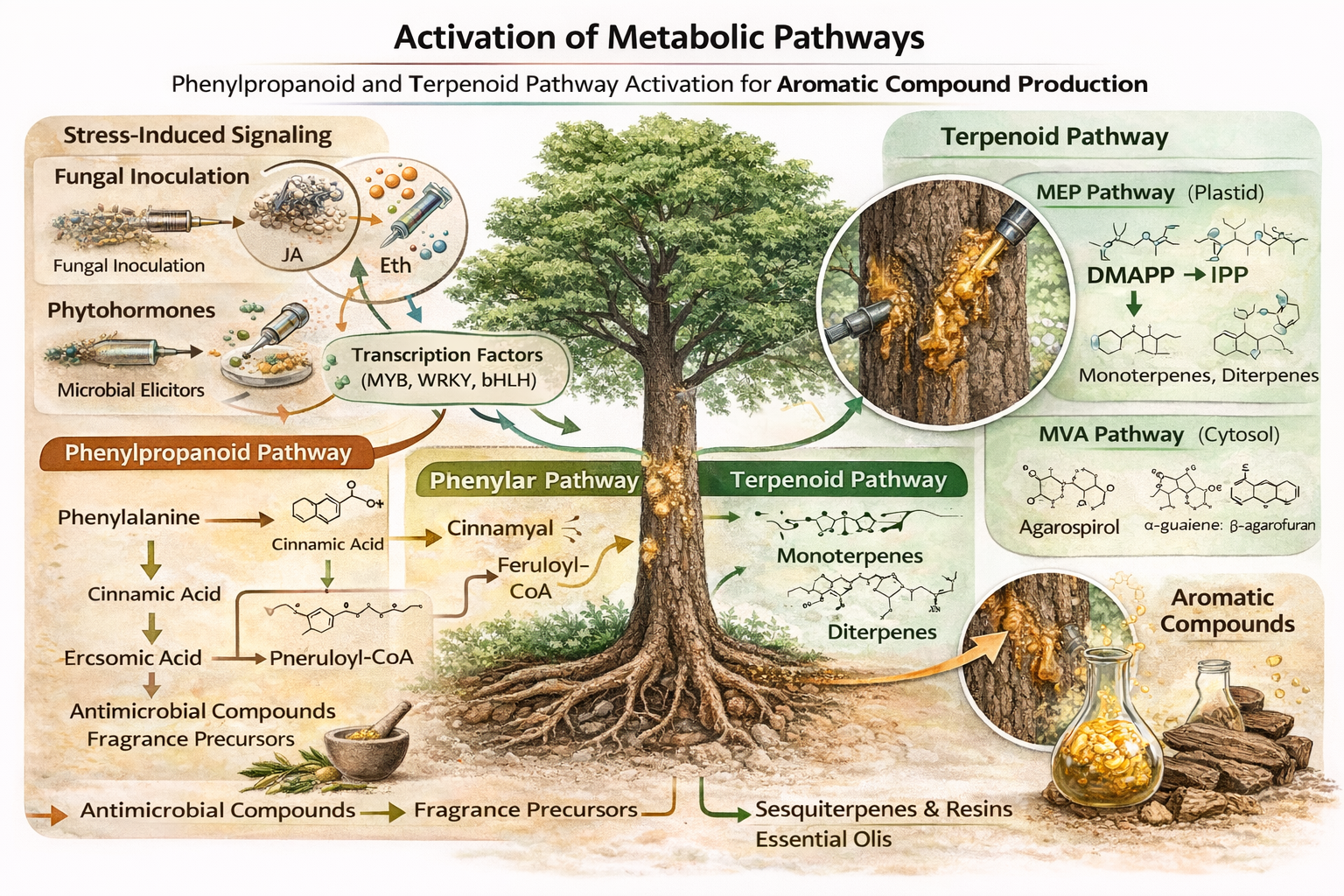
- Purpose: Stimulate specific biosynthetic pathways in the plant to produce aromatic compounds (resin, essential oils, terpenoids).
- Mechanism: Triggered by biotic or abiotic stress, fungal inoculation, or signaling molecules (JA, SA, ethylene).
- Outcome: Enhanced production of secondary metabolites, which include phenolics, sesquiterpenes, and other aroma compounds.
2. Key Metabolic Pathways
A. Phenylpropanoid Pathway
- Produces phenolics, flavonoids, lignin, and aromatic compounds.
- Begins with phenylalanine, converted by phenylalanine ammonia-lyase (PAL).
- Important products for resin/oleoresin:
- Cinnamic acid derivatives
- Lignans & coumarins
- Aromatic precursors for fragrance and defense
Plant response: Increased antimicrobial compounds, aromatic precursors, and structural reinforcement.
B. Terpenoid Pathway
- Produces terpenes and sesquiterpenes, which are key for agarwood aroma.
- Two branches:
- MEP (Methylerythritol Phosphate) Pathway – in plastids, produces monoterpenes and diterpenes.
- MVA (Mevalonate) Pathway – in cytosol, produces sesquiterpenes.
- Enzymes: TPS (terpene synthases) catalyze formation of complex terpenes.
- End products: fragrant sesquiterpenes, resins, and essential oils.
Plant response: Stronger aroma compounds, defense metabolites, and resin accumulation.
3. Stress-Induced Activation
- Signals from fungal inoculation, microbial elicitors, or phytohormones activate transcription factors (MYB, WRKY, bHLH).
- These transcription factors upregulate genes in phenylpropanoid and terpenoid pathways.
- Leads to localized resin accumulation enriched in aromatic compounds.
4. Applications
- Agarwood cultivation: Controlled activation produces high-quality, fragrant resin.
- Aromatherapy & Perfume industry: Consistent sesquiterpene profiles.
- Plant defense research: Understanding secondary metabolite regulation for crop improvement.