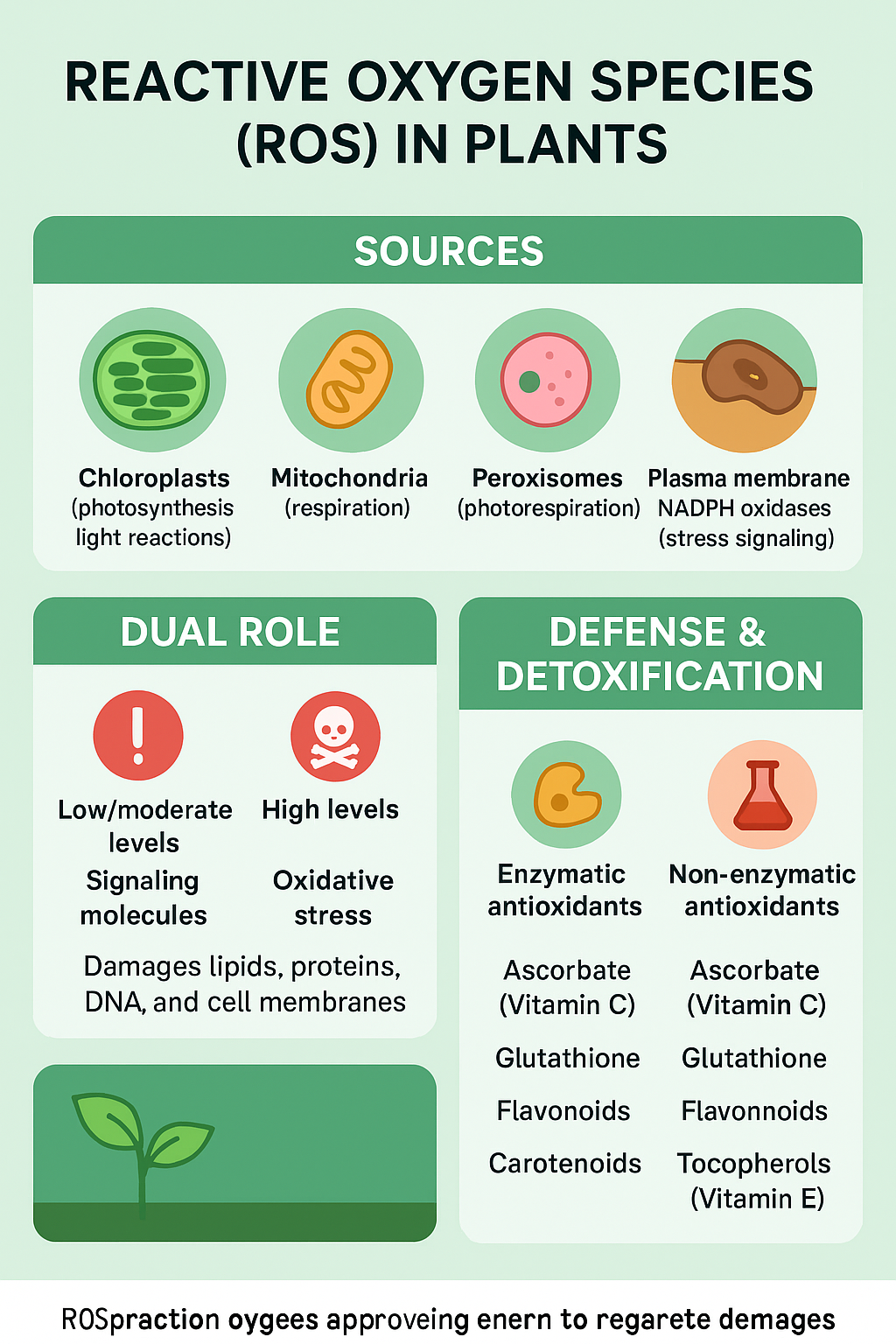
Reactive Oxygen Species (ROS) are highly reactive molecules containing oxygen, such as superoxide (O₂⁻), hydrogen peroxide (H₂O₂), and hydroxyl radicals (•OH).
In plants, ROS play a dual role:
- At low/moderate levels, they act as signaling molecules regulating growth, development, and defense (e.g., triggering Systemic Acquired Resistance).
- At high levels, they cause oxidative stress, damaging lipids, proteins, DNA, and cell membranes.
Sources of ROS in plants:
- Chloroplasts (photosynthesis light reactions)
- Mitochondria (respiration)
- Peroxisomes (photorespiration)
- Plasma membrane NADPH oxidases (stress signaling)
Defense & Detoxification:
Plants manage ROS through antioxidant systems, including:
- Enzymatic antioxidants: Superoxide dismutase (SOD), Catalase (CAT), Ascorbate peroxidase (APX), Glutathione reductase (GR).
- Non-enzymatic antioxidants: Ascorbate (Vitamin C), Glutathione, Flavonoids, Carotenoids, Tocopherols (Vitamin E).