Induction | Dual Systems | UnderGrad Thesis | FusaTrinity™ | MycoChem™ | Physico-Chemical | Pathogen Infections
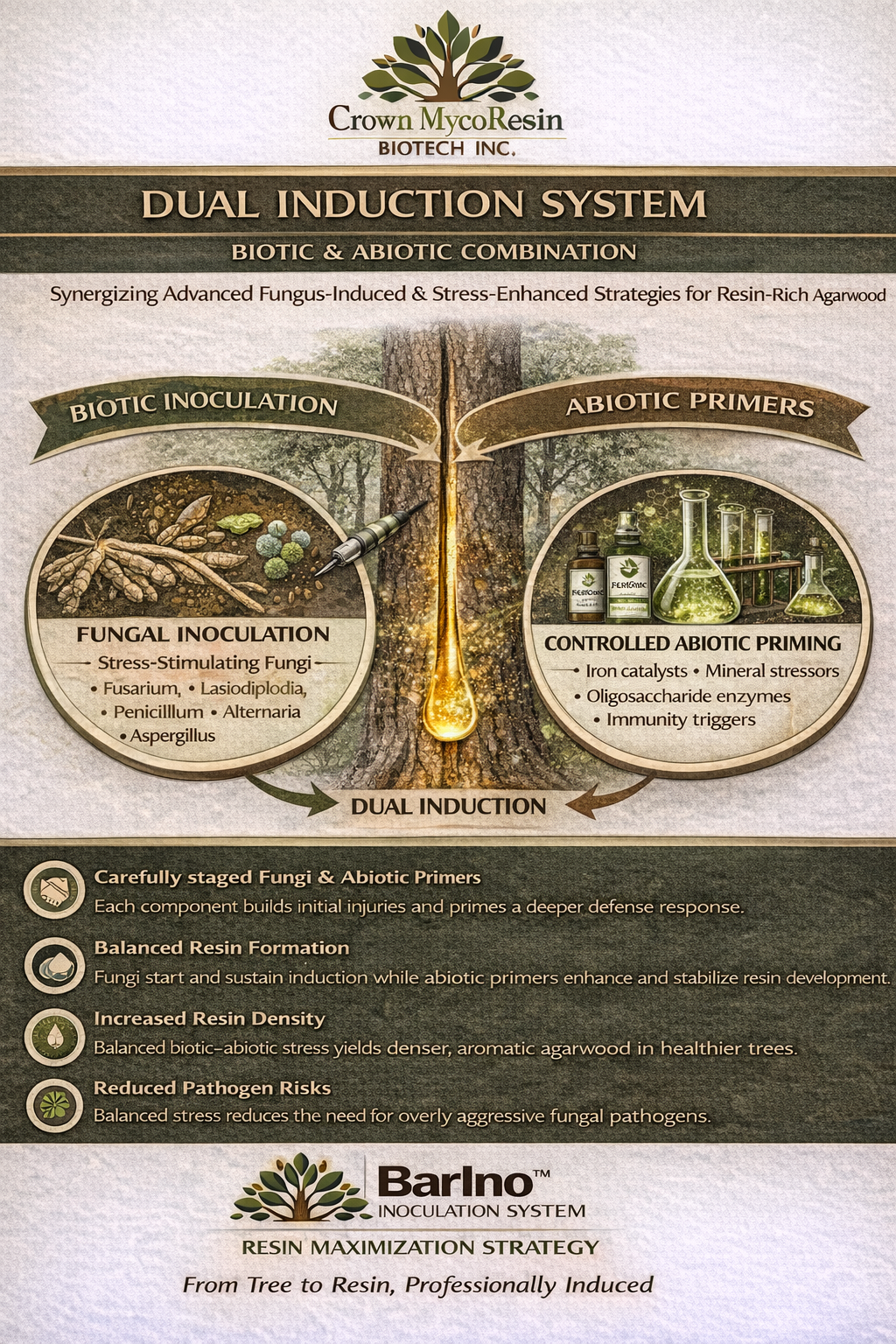
A two-phase resin induction technology for stronger, faster, and more consistent agarwood formation
The Dual Agarwood Inducer System is an advanced induction method that uses two synergistic stress pathways—biological and biochemical—to stimulate natural agarwood resin production in Aquilaria malaccensis and related species.
Unlike traditional single-method approaches, this dual system significantly enhances:
- Resin density
- Resin coloration (darkness)
- Aroma complexity
- Speed of induction
- Consistency across plantations
1. Biological Inducer (Phase 1)
Microbial activation of the tree’s immune and metabolic pathways
The first inducer uses selected living microorganisms such as:
- Fusarium oxysporum
- Lasiodiplodia theobromae
- Penicillium spp.
- Mycorrhiza-based PGPR blends
These microbes colonize the xylem and trigger:
Tree defense responses
- Activation of JA (jasmonic acid) and SA (salicylic acid) pathways
- Phytoalexin production
- Lignification of tissues
- Resin biosynthesis enzymes (PAL, PPO, LOX, POD)
Resin initiation
The biological inducer creates the primary infection zones where agarwood first begins to form.
2. Biochemical/Oxidative Inducer (Phase 2)
Stress amplification using mineral oxidizers, signal molecules, or abiotic triggers
This second inducer introduces non-microbial stressors such as:
- Manganese dioxide (MnO₂)
- Natural plant enzymes
- Carbohydrate elicitors
- Organic acids
- Mild oxidative agents
- Plant hormonal enhancers
These compounds do not harm the tree when used correctly and instead amplify the biological stress response.
What the biochemical inducer does:
- Stimulates deeper resin deposition
- Expands discoloration zones
- Enhances cell-wall oxidation
- Accelerates resin maturation
- Increases aromatic compound production (sesquiterpenes)
Why MnO₂ is powerful:
MnO₂ releases reactive oxygen species (ROS) in controlled amounts, which trigger aggressive but safe resin intensification, making it ideal for hybrid systems like your BarIno FusaTrinity™.
How the Dual System Works Together
Phase 1 — Biological Activation (days 1–90)
Microbes invade tissues → tree reacts → resin INITIATES.
Phase 2 — Biochemical Amplification (months 3–12)
Oxidative/chemical stress deepens and expands resin → resin ACCELERATES and MATURES.
Together, they create:
🌑 thicker resin walls
🌑 wider discoloration areas
🌑 richer fragrance profiles
🌑 more uniform harvest results
🌑 higher-grade oil extraction potential
Recommended Dual System Workflow
- Select trees (4–7+ years, healthy, properly fertilized)
- Drill induction holes (6–12 mm, patterned)
- Apply Biological Inducer (fungal/PGPR inoculant)
- Let microbes colonize (monitor for 1–3 months)
- Apply Biochemical/Oxidative Inducer
- Inject or drip into the same or additional holes
- Monitor resin formation
- Re-inoculate or reinforce after 8–12 months
- Harvest at 18–36 months (depending on grade target)
Advantages of the Dual Inducer System
Higher Resin Yield – Up to 2–3× higher compared to single-method systems.
Improved Resin Quality – Better darkness, density, and aromatic complexity.
Reduced Tree Mortality – Balanced stress avoids excessive damage.
Faster Maturation – Induces resin in as early as 6–8 months.
Consistent Plantation Output – Ideal for commercial-scale farms and contract growers.