Biological Method | Fungal Pathogens | Fusarium | Undergrad Thesis | FusaPrime™ | Risk Management
“Awakening Agarwood Through Nature’s Own Architects.”
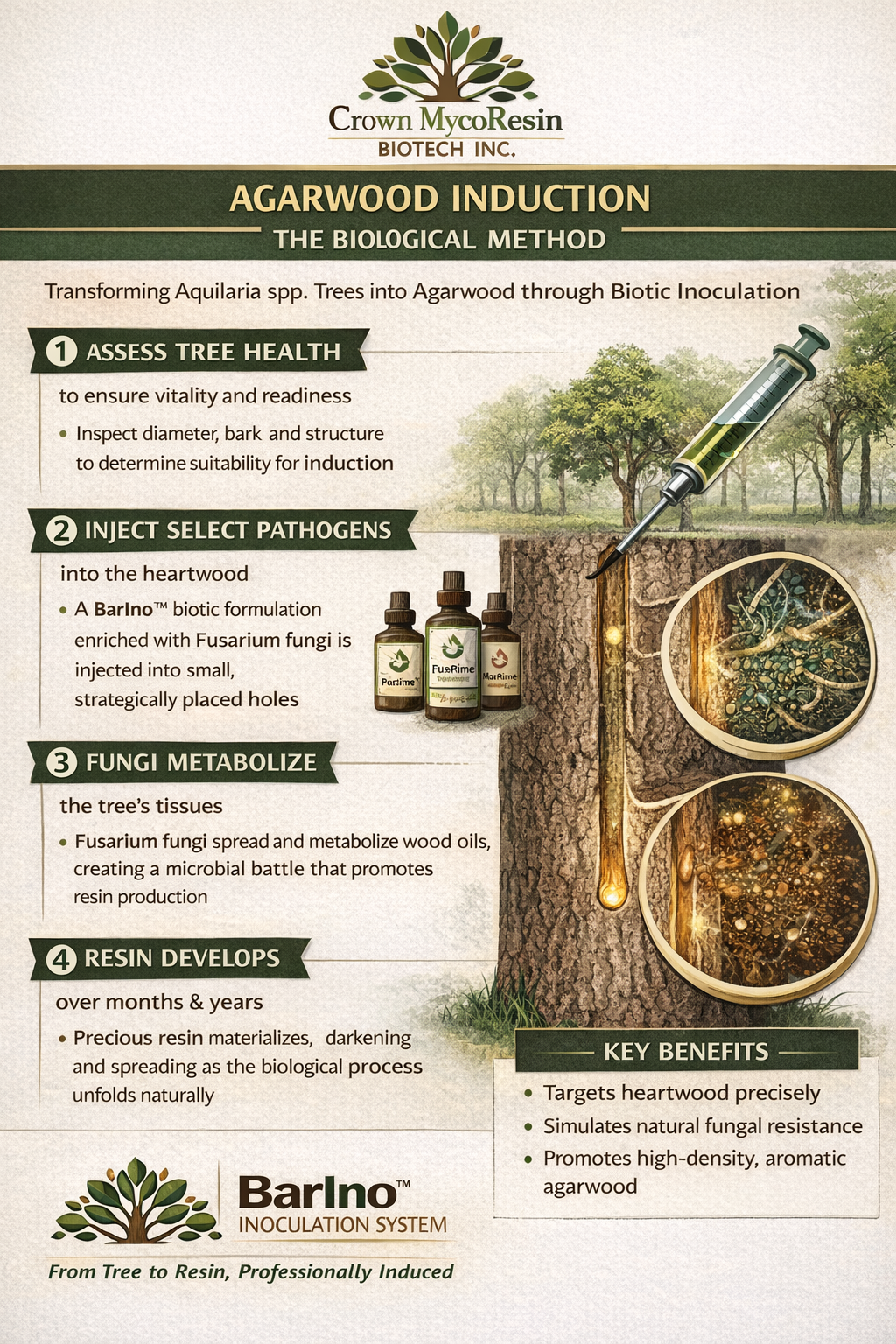
Long before chemicals, machines, or modern plantations, agarwood was born from an intimate dialogue between the Aquilaria tree and the living world around it. Deep within the forests, microscopic organisms — fungi, enzymes, and endophytes — acted as the unseen catalysts of transformation. They were the quiet architects behind one of nature’s most fragrant miracles.
The Biological Method of Agarwood Induction revives this ancient natural partnership, bringing it into the modern age with scientific refinement. Instead of forcing the tree to produce resin, this method invites nature to lead the process, using carefully selected microbial strains to trigger the same defense pathways that once occurred organically in the wild.
At the heart of this approach are beneficial fungi such as Fusarium oxysporum, microbial enzymes, and natural elicitors. These biological agents interact with the tree’s tissues at a molecular level, gently activating the genetic and biochemical responses responsible for creating fragrant oleoresin. The result is an induction process that feels natural — because it isnature, guided through science.
The Biological Method offers growers a powerful promise:
A more sustainable, ecological approach
Slower, but richer and more authentic resin formation
Higher chromone development and deep resin coloration
Minimal tree stress and longer productive lifespan
A cultivation system rooted in regenerative biotechnology
This approach honors the essence of agarwood — a product shaped by life itself. It aligns with a global movement toward ethical production, biodiversity protection, and soil-ecological harmony. For farmers, it represents a return to balance. For investors, it signals a shift toward green biotechnology. For the trees, it is a partnership built on biological intelligence rather than force.
Through the Biological Method, we do more than produce agarwood.
We collaborate with the living ecosystem that has crafted it for millennia, amplifying microbial wisdom with modern science to create purity, depth, and authenticity in every cultivar.
The Biological Method of Agarwood Induction
“Life activating life. Nature engineering nature. Resin born from living harmony.”
A sustainable, science-driven approach to trigger natural resin formation
The Biological Method uses microorganisms, enzymes, and bioactive compounds to safely induce stress within Aquilaria trees, stimulating natural defense responses that produce agarwood resin. This method mimics the natural infection and wound response that creates agarwood in the wild but in a controlled, efficient, and sustainable way.
Biological induction utilizes fungi, bacteria, and biochemical metabolites that interact with the tree’s immune system, activating:
- Phytoalexins
- Lignification
- Oleoresin biosynthesis
- Defense-related enzymes (PAL, PPO, POD, LOX)
- Signal transduction pathways (JA, SA pathways)
This results in the formation of dark, aromatic resinous wood.
Key Microorganisms Used
Biological induction typically employs endophytic or pathogenic fungi that naturally occur in Aquilaria trees:
Common fungal species
| Scientific Name | Role in Resin Formation |
|---|---|
| Fusarium oxysporum | Triggers strong defense response; widely used in Asia |
| Lasiodiplodia theobromae | Promotes rapid discoloration and resin zones |
| Penicillium spp. | Enhances metabolic pathways and resin density |
| Aspergillus spp. | Produces enzymes that modify cell walls |
| Trichoderma spp. | Boosts plant immunity; synergistic with resin-forming fungi |
Benefits of Fungal Induction
| Factor | Fungal Induction | Traditional Wounding & Chemical Methods |
|---|---|---|
| Sustainability | High – Uses natural biological agents | Low – Tree damage & chemical residue |
| Resin Quality | Superior – Strong fragrance & higher oil content | Variable – May contain impurities |
| Induction Speed | Moderate – 6 to 24 months | Fast (Chemical) / Slow (Traditional) |
| Tree Longevity | Low stress – Trees can survive multiple cycles | High stress – Trees often die |
| Market Value | High – Preferred for luxury oud products | Medium – Market preferences vary |
How to Optimize Fungal Induction for Maximum Yield
- Use a combination of fungal species – Some fungi work synergistically to enhance resin formation.
- Ensure proper environmental conditions – High humidity (60-80%) and moderate temperature (25-30°C)support fungal growth.
- Monitor trees regularly – Prevent excessive fungal spread that might weaken the tree.
- Apply fungal inoculation in stages – Multiple controlled inoculations over time enhance resin production without killing the tree.