Induction Systems | Biological | Consortium | Enzyme | Dual System | Chemical | Physico-Chemical | Pathogen
Maximizing Resin Production for High-Quality Oud
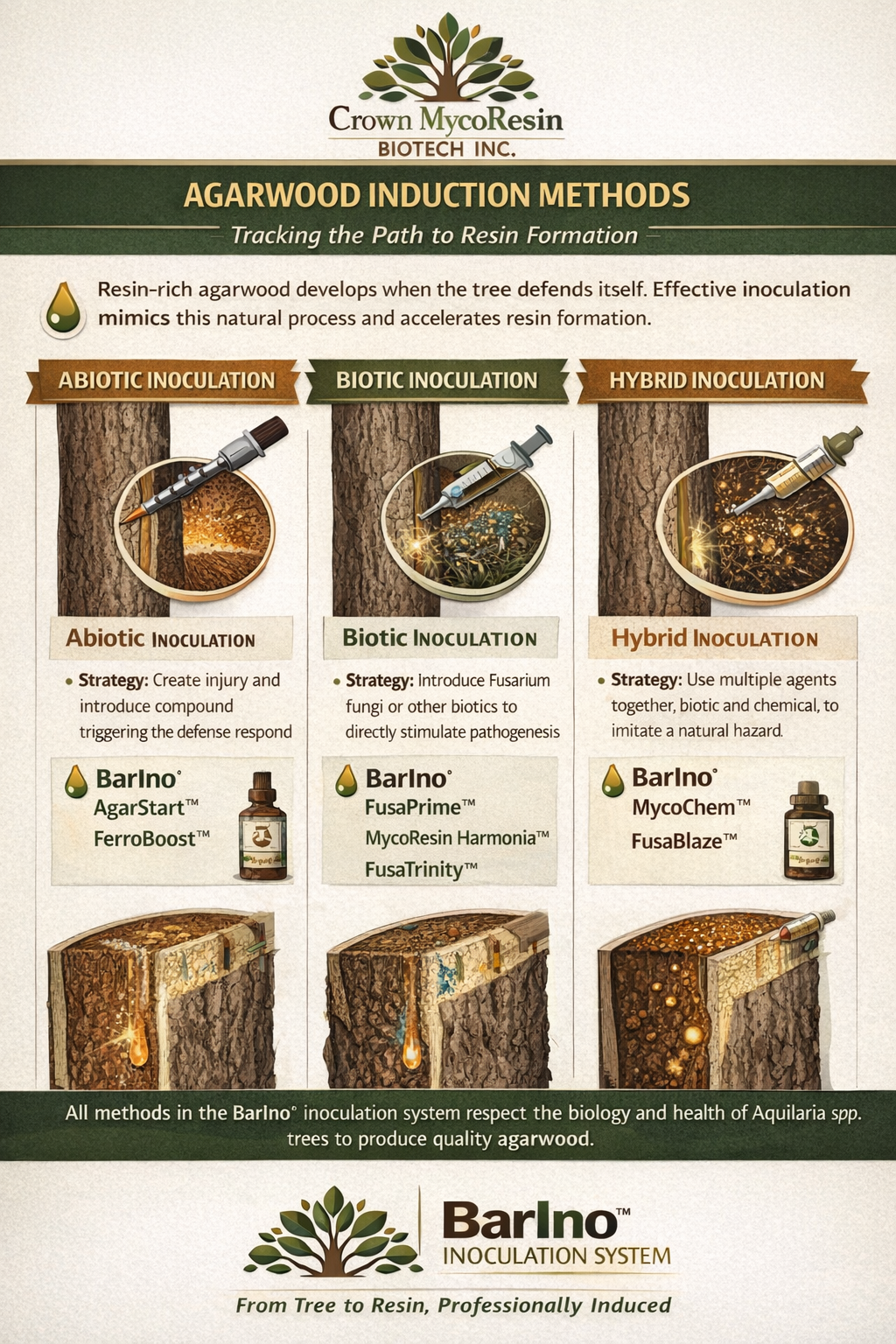
Agarwood induction is the scientific process of stimulating resin production in Aquilaria trees. Application of advanced abiotic and biotic inoculants for Agarwood resin induction. This resin, known as oud, is highly valued for its fragrance, medicinal properties, and religious significance. Since natural agarwood formation is rare, growers use controlled induction techniques to ensure a higher yield of high-quality agarwood.
Key Agarwood Induction Techniques
1. Natural Wounding (Traditional Method)
- How it Works: Deliberate wounding of the tree trunk and branches.
- Resin Formation Process: The tree responds to injury by producing agarwood resin as a defense mechanism.
- Challenges: Slow and inconsistent resin production.
2. Fungal Inoculation (Biological Method)
- How it Works: Introduction of beneficial fungi (e.g., Fusarium oxysporum) into the tree.
- Resin Formation Process: The fungus interacts with the tree, triggering natural resin secretion over time.
- Advantages: More natural, sustainable, and higher-quality resin formation.
- Challenges: Requires proper strain selection and tree monitoring.
3. Fungal Blend (Fungal Consortium Method)
- How it Works: Application of a controlled consortium of multiple resin-inducing fungi, selected for synergistic interaction rather than single-strain inoculation.
- Resin Formation Process: Different fungi colonize distinct tissue zones, triggering layered and prolonged defense responses that result in richer, darker, and more aromatic resin development.
- Advantages: Mimics natural agarwood formation more closely, Produces complex fragrance profiles, Improved resin depth and longevity, Lower chemical dependency
- Challenges: Needs advanced microbial management, Requires strain compatibility testing, Slower initial resin onset compared to chemical methods, Sensitive to environmental conditions
4. Microbial & Enzyme-Based Induction (Advanced Biotech Method)
- How it Works: Use of specialized enzymes or bacteria to initiate agarwood formation.
- Resin Formation Process: The microbes interact with tree tissues, encouraging resin development.
- Advantages: Eco-friendly, sustainable, and scientifically controlled resin production.
- Challenges: Requires specialized knowledge and controlled conditions.
5. Dual Induction System Method (Hybrid Method)
- How it Works: Combines biological agents (fungi or microbes) with chemical elicitors or minerals to trigger a stronger and more consistent defense response in agarwood trees.
- Resin Formation Process: Biological agents initiate natural infection-like stress, while chemical components intensify resin biosynthesis pathways. The dual stimulus accelerates resin accumulation and improves density.
- Advantages: High resin yield and quality, Faster induction compared to single-method systems, More predictable and scalable results, Balances natural processes with modern control
- Challenges: Requires precise formulation and timing, Higher technical skill and monitoring needed, Risk of over-stressing trees if poorly managed
6. Chemical Induction (Modern Artificial Method)
- How it Works: Injection of specific chemical stimulants to trigger resin production.
- Resin Formation Process: The chemicals activate the tree’s natural defense response, accelerating resin formation.
- Advantages: Faster results compared to fungal inoculation.
- Challenges: Risk of affecting resin purity and tree health if not done properly.
7. Stress-Based Induction (Environmental Factors)
- How it Works: Controlled water stress, nutrient restriction, or temperature variations to trigger resin formation.
- Resin Formation Process: The tree reacts to stress by producing protective resin.
- Advantages: Low-cost method using natural conditions.
- Challenges: Difficult to control and predict resin quality.
Choosing the Right Induction Technique
| Method | Speed | Resin Quality | Technical Level | Sustainability |
|---|---|---|---|---|
| Natural Wounding | Slow | Moderate | Low | High |
| Fungal Inoculation | Moderate | High | Low-Medium | Very High |
| Chemical | Very Fast | Medium | Low–Medium | Low |
| Fungal Blend | Moderate | High | High | High |
| Microbial/Enzyme | Moderate | High | Very High | Very High |
| Dual Induction | Fast–Moderate | Very High | Very High | High |
| Stress-Based Induction | Slow | Low to Medium | Low | High |