
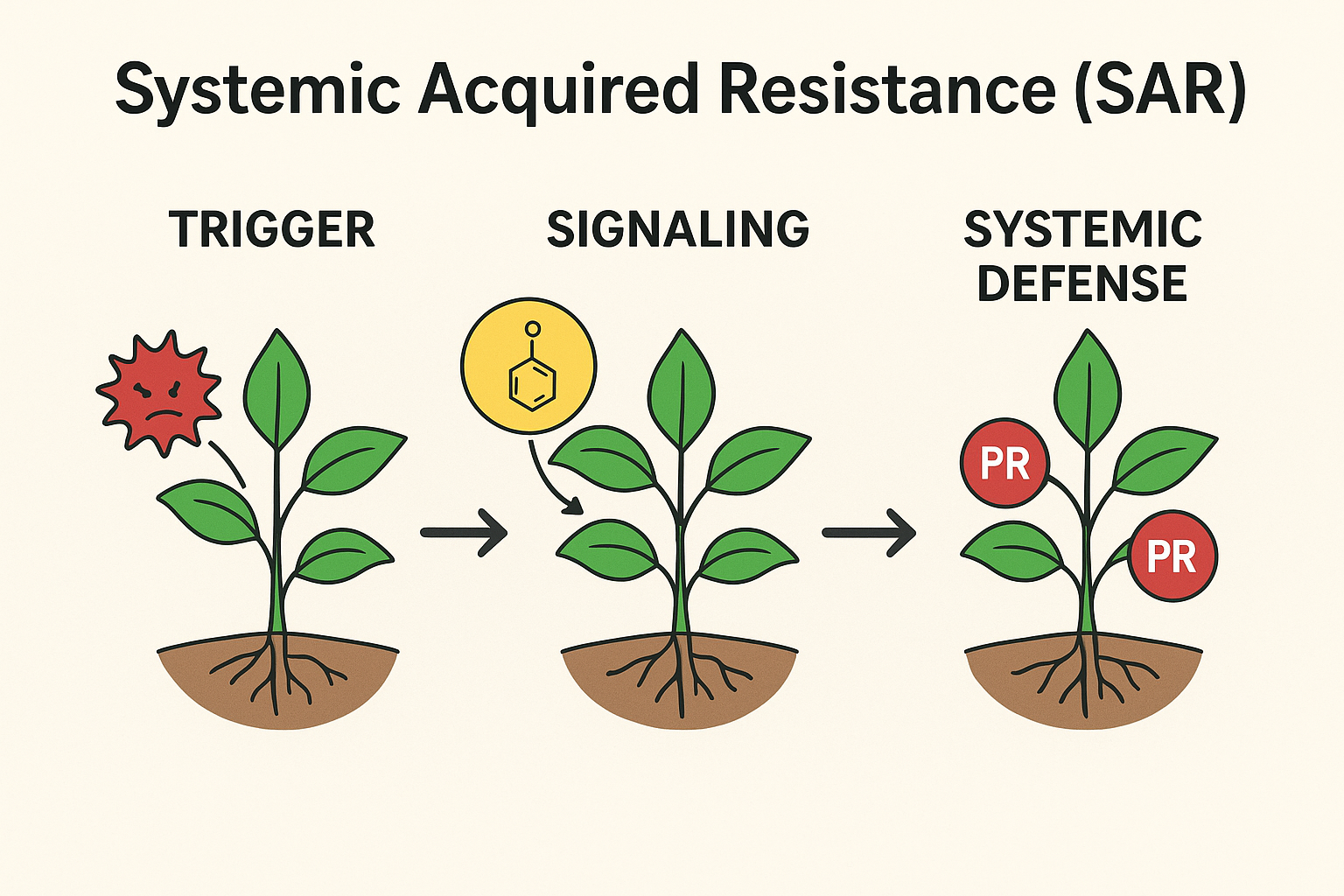
Systemic Acquired Resistance (SAR) is a plant-wide immune response that develops after a localized exposure to a pathogen or stress. It’s like the plant’s version of “immune memory”—once one part of the plant is attacked, signals spread to other tissues, preparing them to better resist future infections.
Key Features of SAR:
- Triggered by:
- Pathogen infection (fungi, bacteria, viruses)
- Some chemical inducers (e.g., salicylic acid, benzothiadiazole)
- Mediated by:
- Salicylic acid (SA) – central signaling molecule
- Pathogenesis-related (PR) proteins – defensive enzymes such as β-1,3-glucanases, chitinases, and defensins
- Long-lasting: Provides protection for days to weeks, sometimes for the entire life cycle of the plant.
- Systemic: Resistance spreads throughout the plant, not just where the infection happened.
Mechanism:
- Local infection or stress → Pathogen recognition by the plant’s immune receptors.
- Signal generation → Salicylic acid and other mobile signals accumulate.
- Systemic signaling → These signals move through the phloem to distant, uninfected tissues.
- Defense gene activation → Pathogenesis-related (PR) proteins and secondary metabolites are produced throughout the plant.
- Enhanced resistance → The whole plant becomes more resistant to a broad spectrum of pathogens.
Importance:
- Natural plant defense → Reduces disease severity.
- Agricultural applications → SAR inducers (like Acibenzolar-S-methyl, ASM) are used as eco-friendly plant protectants.
- Broad-spectrum → Unlike resistance genes that target specific pathogens, SAR offers general defense.